



Did you know that the plastic cutting board in your kitchen releases small plastic particles at every meal, and that they end up straight in your digestive tract? That sounds abstract, but science is becoming increasingly concrete about what happens next: trillions of bacteria live in your gut and actively steer your health, and they are exactly the ones affected by ongoing exposure to microplastics. This article explains what happens to your gut microbiome and microplastics when you stop using plastic kitchen items, why the transition period really matters, and what the most recent research says about it.
What microplastics do in your gut: the state of the science
Your gut microbiome consists of trillions of micro-organisms that work together to regulate your digestion, your immune system and even your mood. That cooperation is sensitive to disruption. Disruption of gut flora by microplastics is now a serious subject of scientific research, and the first findings give food for thought.
A systematic review published in BMC Gastroenterology (Thin et al., 2025) analysed several independent studies and concluded that exposure to microplastics made of polyethylene, polystyrene, PET and PVC is associated with so-called gut dysbiosis: a disruption in which beneficial bacteria decrease and harmful species increase. At the same time, the production of short-chain fatty acids deteriorates, including butyrate, a substance that keeps your intestinal wall strong and resilient.
Research presented at UEG Week 2025, carried out for the first time with human stool samples, showed that specific bacterial families shift when exposed to five common types of plastic. The cultures became more acidic, the composition of bacteria changed noticeably, and the metabolites the bacteria produced deviated from the norm. The researchers pointed out that some of those changes resemble patterns previously linked to depression and colorectal cancer. That is no reason to panic, but it is a signal that this is not something to ignore.
The plastic cutting board as an underestimated source for your gut
There are many sources of microplastics in our daily lives: tap water, air, packaging. But the link between the plastic cutting board and gut bacteria is particularly relevant because the cutting board is literally the place where plastic and food meet. Every time you run a sharp knife over a polyethylene or polypropylene board, you wear loose tiny particles that stay behind on what you are cutting.
Research by the University of North Dakota (Yadav et al., 2023) calculated that a single plastic cutting board can release up to 50 grams of microplastics per year into your food with normal use. Up to 15 particles can be released per cut. Scientists describe the plastic cutting board as "an overlooked source" of microplastics in the food chain.
A 2025 follow-up study (Gan et al., Environmental Health Perspectives) went a step further. Mice were fed food prepared on polypropylene and polyethylene plastic cutting boards. After twelve weeks the animals showed clear shifts: polypropylene disrupted the barrier function of the intestinal wall and caused inflammation, while polyethylene changed the gut microbiome and the metabolic profile of the liver. This is the first direct link between the specific plastic particles from a cutting board and measurable biological effects in the digestive tract.
For more background on how microplastics from plastic kitchen items accumulate in organs, also read: microplastics from a plastic cutting board and your organs: how they build up over the years.
Why the gut microbiome reacts differently to microplastics when it is already disrupted
Not everyone reacts in the same way to exposure to plastic particles. Research published in the Journal of Hazardous Materials shows a remarkable difference: in models with a healthy digestive system, polystyrene microplastics caused no clear inflammation. In models that already had an irritated gut, the exposure did make the symptoms worse.
The mechanism lies in the production of butyrate. Microplastics inhibit the bacteria that produce this fatty acid. Less butyrate means an intestinal wall that becomes more sensitive to stimuli and more permeable. That makes your gut more vulnerable, not only to the plastic particles themselves, but also to other substances that would normally stay out.
When researchers gave extra butyrate to the affected models, the symptoms partly improved. That suggests that it is not the physical presence of plastic particles that does the most damage, but the chemical disruption they cause in the metabolism of your gut bacteria.
Which bacteria are affected by microplastics in food?
Not all gut bacteria are equally vulnerable. Several studies keep pointing to the same families as particularly sensitive to microplastics. Bacteria from the families Lachnospiraceae, Ruminococcaceae and Oscillospiraceae are responsible for a large part of the production of short-chain fatty acids. It is precisely these species that decrease with exposure to plastic.
At the same time, the presence of bacteria from the Enterobacteriaceae family increases. That family includes species that, at excessive concentrations, are linked to inflammatory processes in the gut. The shift from one group to the other is what researchers call "dysbiosis": not a completely absent microbiome, but a disturbed balance that can have consequences over time.
The ZonMw Microplastics and Health programme, which funded several research projects in the Netherlands, confirmed that small plastic particles can pass through the intestinal wall and end up in tissues. That is relevant: once particles cross the border of the gut, the specific gut bacteria also play a role in how the immune system responds.
The switch to plastic-free cooking: what happens in the first weeks
Helping your gut recover through plastic-free cooking is not a matter of a single day. The gut microbiome is dynamic and adapts to changes in diet and environment, but it does so step by step. When you stop using a plastic cutting board and switch to a material that does not release particles, you remove a daily source of intake. That effect is cumulative: less input per day makes a difference over weeks and months.
The first weeks are crucial for another reason: that is when you anchor the habit and take a critical look at the rest of your kitchen. Replacing a plastic cutting board is the most direct step, because it comes into contact with your food at every meal. It is also one of the few sources you have full control over. Filtering tap water takes extra effort and equipment; a cutting board you simply swap.
The gut microbiome needs time to recover after a period of disturbed balance. Studies on recovery after other disruptions, such as antibiotic use or dietary changes, show that changes in bacterial composition can become visible within two to four weeks once the disruptive source is removed. For gut recovery from microplastics there are no direct human studies yet that name an exact timeframe, but the logic is the same: less intake, less pressure on the system, more room for recovery.
Whether that recovery is complete also depends on how long and how intense the exposure was, and on other factors such as diet, stress and sleep. Fibre from vegetables, legumes and wholegrain products supports the growth of exactly the bacteria that produce butyrate and thereby strengthen the intestinal wall. That is not a magic supplement, but a practical way to improve the condition of your microbiome while you minimise the external sources of disruption.
Stainless steel as the logical choice for a plastic-free kitchen
When you replace the plastic cutting board, you want a material that does not release particles while you cut. Stainless steel (304 stainless steel) is non-porous and does not wear the way plastic does. No plastic fragments come loose on contact with a knife, there is no release of additives such as phthalates or BPA-like substances, and the surface does not allow cut marks in which bacteria can settle.
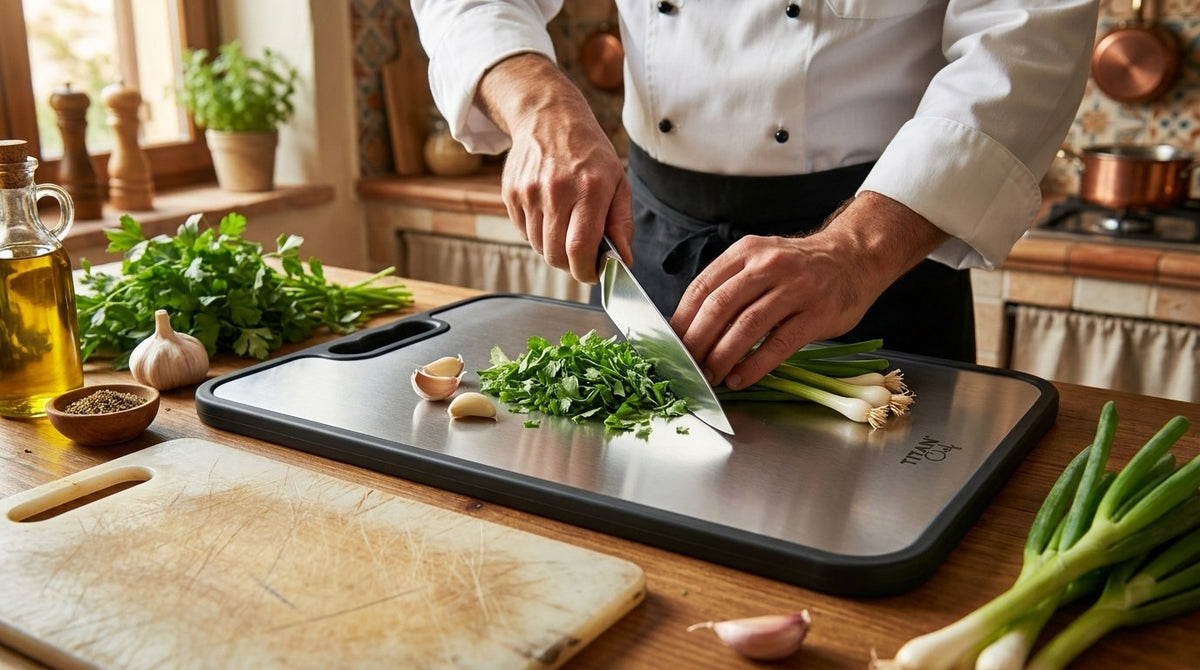
The TitanChef stainless steel cutting board is made of food-grade 304 stainless steel with a brushed finish. Both sides are usable, which is practical if you want to keep raw meat and vegetables strictly separate. The board is dishwasher safe, so maintenance does not become an extra ritual. For those who work a lot with juicy meat or fruit, the TitanChef PRO also offers a non-slip rubber edge and a raised rim that keeps juices on the board instead of on your worktop.
Scratches on stainless steel are purely cosmetic: they do not affect the hygiene or the sealed nature of the surface. That is a fundamental difference with plastic, where cut marks get deeper and offer more room for both bacteria and loose particles. Read more about what is in the scratches of a plastic board after a year of use in: plastic cutting board scratches, bacteria and microplastics: what is in those grooves after a year?
Looking for a cutting board without those drawbacks? Take a look at the TitanChef Original, made of solid stainless steel.
Also read: Are microplastics harmful to your health? What the research says.
Frequently asked questions about microplastics, the gut microbiome and plastic-free cooking
What does plastic from a cutting board do to your gut bacteria?
Microplastics released while cutting on a plastic board end up in your digestive tract with your food. Research shows they can disrupt the composition of your gut bacteria: beneficial bacteria decrease, while pathogenic species can spread. Specifically, bacteria that produce butyrate are affected, a substance that keeps your intestinal wall strong and healthy.
Do microplastics leave your body by themselves, or do they accumulate in your gut?
Part of the microplastics leaves the body via the stool, but smaller particles, so-called nanoplastics, can pass through the intestinal wall and accumulate in tissues and organs. Research within the ZonMw Microplastics and Health programme confirms that small plastic particles can cross the intestinal wall, the lungs and even the blood-brain barrier. How quickly and to what extent accumulation takes place differs per person and per type of plastic.
Will you notice anything when you switch to a plastic-free kitchen, or does nothing change?
Most people do not notice direct, measurable relief of symptoms in the first weeks, because the gut microbiome recovers gradually and the effect of a single change is hard to isolate. The gut microbiome does respond to a lower supply of foreign substances, however, and that change builds up over time. What you do achieve straight away: you remove a daily source of microplastics that comes into contact with your food at every meal.
Can a damaged gut microbiome be more sensitive to microplastics than a healthy one?
Yes, research points in that direction. A study published in the Journal of Hazardous Materials showed that in models with an already irritated digestive system, microplastics made the symptoms worse, while healthy models showed no clear inflammation. This suggests that a disrupted microbiome is more vulnerable to the effects of plastic particles, which is an extra reason to limit exposure if you already have gut problems.
Is it worth replacing just your cutting board, or do you need to overhaul the whole kitchen?
Replacing your cutting board is one of the most effective single steps you can take. Research by the University of North Dakota calculated that one plastic cutting board can release up to 50 grams of microplastics per year into your food. You do not need to overhaul the whole kitchen at once: start with the board, because that is the source that literally comes into contact with your food at every meal, and therefore one of the most direct entry points for microplastics into your digestive tract.
Which gut bacteria are most affected by microplastics from food?
Bacteria from the families Lachnospiraceae and Ruminococcaceae, which are responsible for producing short-chain fatty acids such as butyrate, turn out to be particularly sensitive to microplastics. These are exactly the bacteria that play a key role in keeping the intestinal wall healthy and regulating inflammatory processes in the gut. Research presented at UEG Week 2025 confirms specific shifts in bacterial composition with exposure to several types of plastic.
Are microplastics from a plastic cutting board more dangerous than those from other sources such as tap water or air?
They are different types of plastic with a different particle size, but what sets the cutting board apart is the direct route to food: the particles end up straight in what you eat, at every meal. Tap water and air are harder to control as sources. The cutting board is in fact the most controllable source in your daily routine, and researchers describe it as a so far underestimated contributor to total microplastic intake through food.
Conclusion: microplastics and your gut microbiome call for a structural choice
The link between microplastics, your gut microbiome and your daily kitchen routine is now well supported in the scientific literature. Plastic cutting boards release measurable amounts of microplastics into food with normal use, and those particles disturb the balance of gut bacteria in a way that can affect the intestinal wall, the immune system and the metabolic profile. The first weeks after switching to plastic-free cooking are crucial because that is when you remove the biggest direct source of daily intake and give your gut microbiome room to recover.
That recovery takes time and consistency. Replacing the cutting board is not a miracle cure, but it is the most direct, controllable step you can take today. A stainless steel cutting board releases nothing into food, is easy to clean and lasts for years without the surface changing in ways that compromise hygiene.
Take a look at the TitanChef stainless steel cutting boards below and find more blogs to read.


