



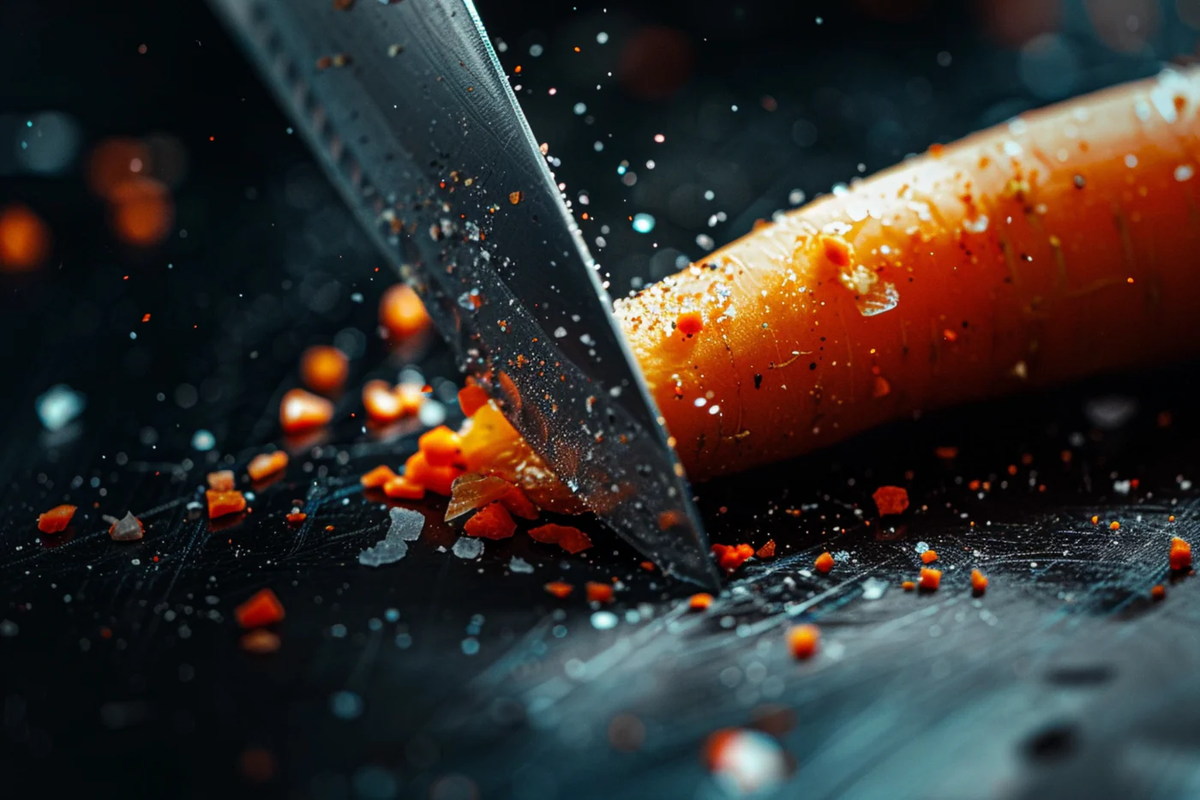
Did you know you may be swallowing tiny plastic particles while you cook, without even noticing? A growing number of studies show that microplastics can end up in your food through kitchen tools, such as worn plastic cutting boards. In this blog you will read why a plastic-free cutting board is essential for a healthy kitchen, and why stainless steel is a safe and durable alternative.
Short answer: If you want a cutting board without plastic, your options are stainless steel, glass, wood and bamboo. Stainless steel and glass are non-porous and dishwasher safe; stainless steel releases no microplastics and needs no maintenance. Wood is kinder to knives, but porous and not dishwasher safe. Plastic boards, on the other hand, shed microplastics when you cut on them.
What are microplastics and how do they get into your food?
Microplastics are tiny plastic particles, smaller than 5 millimetres. They are created when larger plastic products wear down, such as clothing, packaging and, yes, plastic cutting boards. When you cut on a plastic board, scratches and worn spots appear and small particles break loose. Those particles end up on your knife, in your food and eventually in your body. Research even suggests that people ingest an average of 5 grams of microplastics per week, roughly one credit card every 7 days.The health risks of microplastics
Although research is still ongoing, scientists warn about the possible risks of microplastics:
- Inflammation in the digestive tract
- Possible hormone-disrupting effects
- Microplastics have been found in the brains and organs of animals
Not every effect has been 100% proven, but the principle holds: prevention is better than cure. Especially when you can reduce your exposure to microplastics with a few simple choices in the kitchen.
Why plastic cutting boards are a risk
Plastic cutting boards seem practical, light and affordable, but in the long run they are anything but safe:
- They wear quickly when used with sharp knives
- Plastic particles break loose and are invisible to the naked eye
- They are hard to clean thoroughly: bacteria settle into the scratches
Many people use plastic cutting boards out of habit, without being aware of the risks.
What is the alternative to a plastic cutting board?
Fortunately, there are several alternatives:
- Wooden cutting boards: natural, but porous and hard to keep hygienic
- Bamboo cutting boards: sustainable, but prone to cracking and less kind to knives
- Stainless steel cutting boards: highly hygienic, hard-wearing and completely free of microplastics
If health and safety come first for you, stainless steel is the best choice. No cracks, no loose particles, no hassle.
TitanChef stainless steel cutting board: a conscious choice
The TitanChef stainless steel cutting board is designed for people who want the best in their kitchen:
- 100% plastic-free and food safe
- Resistant to scratches, stains and odours
- Easy to clean and dishwasher safe
- Made from high-quality brushed stainless steel
Frequently asked questions about plastic-free cutting boards
Is a plastic cutting board really harmful?
Not necessarily right away, but as it wears, it releases microplastic particles that you can swallow without noticing. That makes it unsafe in the long run.
What is the safest material for a cutting board?
Stainless steel is one of the most hygienic and durable options. It barely wears and does not release any substances into your food.
Why not a wooden cutting board?
Wood is natural, but porous. It holds on to moisture, bacteria and odours, which makes it hard to keep 100% clean.
Isn't stainless steel bad for your knives?
The TitanChef cutting board is made from brushed stainless steel, which makes it kinder to knives than standard metal surfaces. Ideally, use good-quality knives.
Conclusion
If you want to keep microplastics out of your kitchen, start with the basics: your cutting board. Make a conscious choice for a cutting board without plastic, and put your health first with a safe, durable and stylish alternative such as stainless steel.
Looking for a cutting board without plastic? The TitanChef Original is made from 304 stainless steel and releases no microplastics.
Want to see all materials side by side? Read our comparison of wood, bamboo, plastic, glass and stainless steel.
To prevent cross-contamination, use a separate cutting board for raw meat or fish. This is also the advice of the Dutch Nutrition Centre, the Voedingscentrum. That plastic cutting boards shed microplastics when you cut on them has been researched and published in Environmental Science and Technology (2023): depending on the material, this amounts to an estimated few grams to tens of grams per person per year.
Frequently asked questions about a plastic-free cutting board
Which cutting board is truly plastic-free?
Cutting boards made from stainless steel, glass, solid wood and bamboo contain no plastic. With wood and bamboo, watch out for the glue layers in cheap boards. Stainless steel and glass are also non-porous and dishwasher safe.
Does a stainless steel cutting board release microplastics?
No. Stainless steel is a metal and contains no plastic, so no microplastics are released when you cut. Plastic cutting boards do release them, according to research published in Environmental Science and Technology in 2023.
Is a plastic-free cutting board also hygienic for raw meat?
A non-porous board that you can clean thoroughly and put in the dishwasher is best suited for raw meat. Stainless steel and glass meet that requirement. The Voedingscentrum (Dutch Nutrition Centre) advises using a separate board for raw meat or fish.


